
OpenAI Sora Shutdown: How One of AI’s Biggest Products Quietly Died
The OpenAI Sora shutdown might be the most expensive “never mind” in AI history, and it happened way quieter than you’d expect for a product that once had Hollywood buzzing. Sora launched in February 2024 promising to disrupt film and video production. By March 2026, OpenAI was posting a farewell message on X. That’s the whole arc, and it’s worth sitting with for a second before we get into who’s benefiting from it now.
Table of Contents
What the OpenAI Sora Shutdown Actually Looked Like, Step by Step
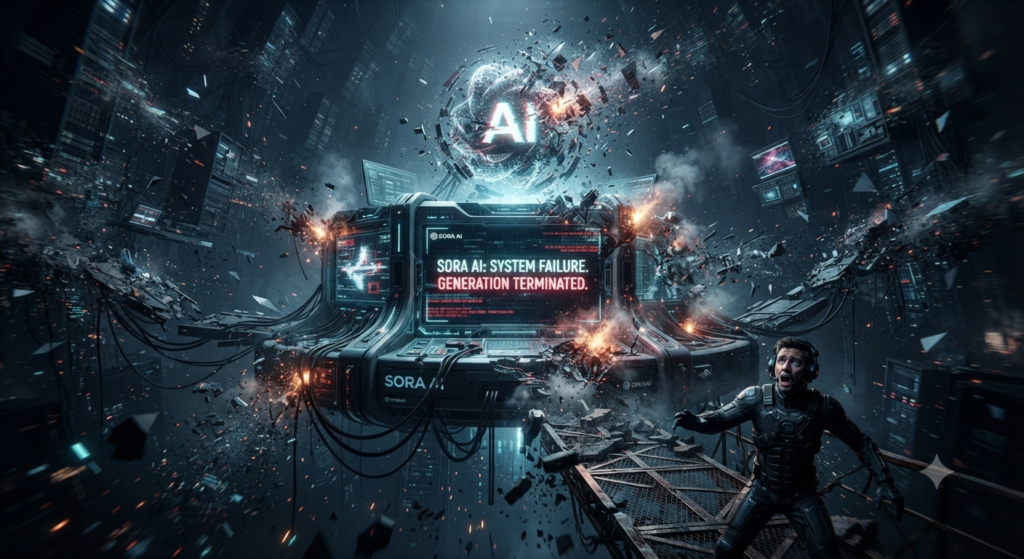
Here’s the timeline, because it matters with the OpenAI Sora shutdown: OpenAI announced the shutdown on March 24, 2026. The web and app experiences were discontinued a month later, on April 26. The API — the part developers were building on — isn’t fully dead yet, but it’s on a clock, set to shut down completely on September 24, 2026. So this wasn’t an overnight disappearance. It’s been a slow fade for months, and if you’re building anything on the Sora API right now, that deadline is closer than it feels.
So Why Did OpenAI Kill It?
The short version, based on WSJ reporting: Sora just wasn’t making money, and it was burning an absurd amount of it. Its daily operating cost was roughly $1 million — some estimates put peak-usage compute costs as high as $15 million a day — against just $2.1 million in total lifetime in-app purchase revenue, according to mobile analytics firm Appfigures. Read that again — total revenue across its entire lifespan, not monthly. User numbers tell the same story: downloads peaked at 3.3 million in November 2025, fell to 1.1 million by February 2026, and active users slid from around a million to under 500,000 before OpenAI pulled the plug.
Video generation is just brutally expensive to run at scale compared to text or even image generation, and Sora never found a way to make the economics work. Add in mounting copyright and deepfake concerns — Sora let people upload their own faces and generate video with them, which raised exactly the kind of legal questions you’d expect — and you get a product that was technically impressive but financially unsustainable, especially with OpenAI reportedly steering hard toward profitability ahead of a future IPO.
The $1 Billion Disney Deal That Fell Apart
This is the detail that really stings. Disney had reportedly committed roughly $1 billion toward an investment and licensing partnership that would have given Sora users access to more than 200 Disney, Marvel, Pixar, and Star Wars characters. That deal collapsed — and Disney reportedly found out about the shutdown less than an hour before OpenAI’s public announcement. When a partner with that much money on the table gets blindsided that badly, it tells you how fast this decision came together internally.
Kling, Runway, and Vidu Are Already Cashing In
This is the part that actually matters for anyone who makes AI video content, and it happened fast in the wake of the OpenAI Sora shutdown. announcement, Kling AI, RunwayML, and Vidu all saw real user growth. Kling AI specifically — the video generator owned by China’s Kuaishou Technology — saw its global weekly active users jump 4% to an average of 2.6 million, according to Sensor Tower data shared with Bloomberg.
That’s not a coincidence. When a major, trusted name in AI video suddenly disappears, the users don’t just vanish with it — they go looking for the next best option, and right now that migration is happening in real time. If you’ve been on the fence about trying Kling or leaning further into Runway, this is exactly the moment a lot of other creators are making that same move.
What This Means If You Were Using Sora
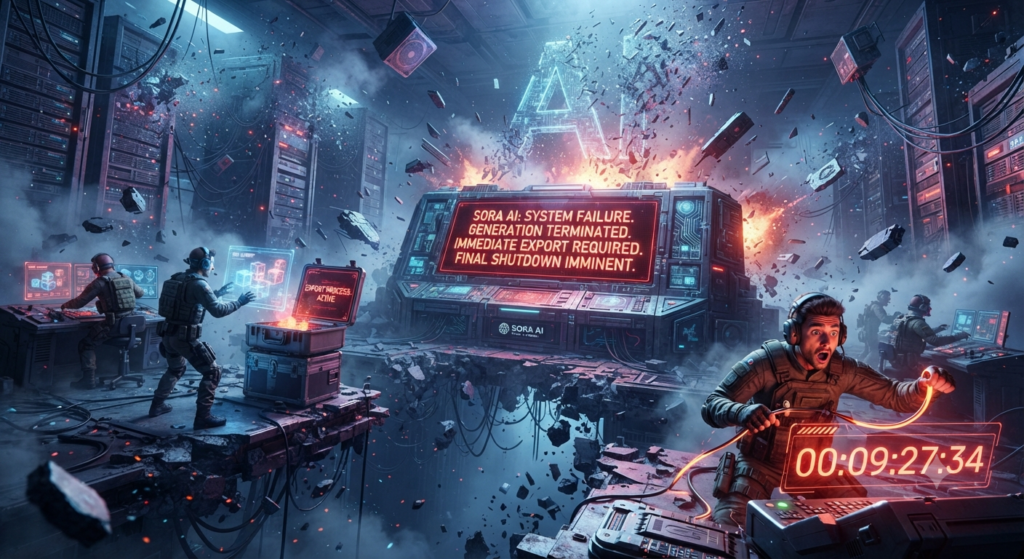
If you had content sitting in Sora, the priority right now is getting it out. OpenAI set up an export process at Sora’s sunset page, and anything left on their servers after the final shutdown isn’t coming back. Don’t wait until September assuming you’ll remember later.
Beyond that, the OpenAI Sora shutdown is a genuinely useful reminder about building on any single AI tool, including the ones we cover regularly here. Sora had Disney talks, a viral launch, and a full consumer app, and it still got cut inside two years. If your content workflow leans hard on one platform, it’s worth having a second option ready to go, whether that’s Kling, Runway, or something like PixVerse or Seedance 2.5, both of which we’ve covered recently and which aren’t going anywhere near this kind of shutdown risk right now.
Curious how the surviving AI video tools stack up? Check out our breakdown of PixVerse’s $2B valuation and ByteDance’s Seedance 2.5 for a look at where the video generation space is actually headed.
For more breaking updates on AI tools, models, and industry news, check out our AI News section for the latest coverage.