
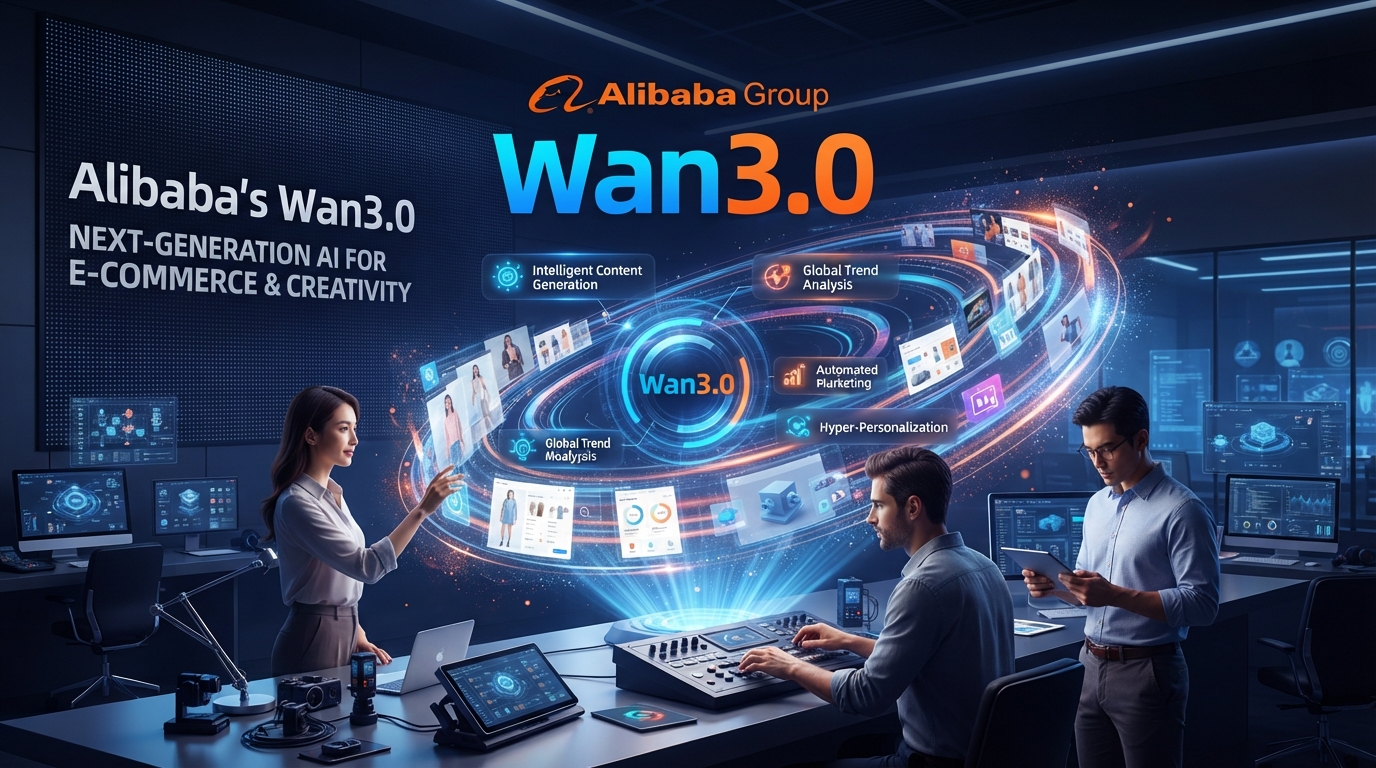
Alibaba’s Wan3.0 Just Did Something No Other AI Video Model Has Done: Turn a PowerPoint Into a Video
So there’s a new model out, and honestly this was the first week I actually sat down and read everything about it, because the headline sounded so strange at first that I figured someone was just overselling it. “Upload your slide deck, get a video out the other end.” Turns out that’s not marketing fluff — Alibaba’s Wan3.0 entered public beta on August 6, and it genuinely does that.
If you haven’t come across the Wan line before: it’s Alibaba’s own video generation model family, developed by Tongyi Lab since 2023 (the same team behind the Qwen language models, though the two are separate products — worth clarifying since people mix them up a lot online). You can read Alibaba’s own announcement on the Alibaba Cloud blog if you want to go straight to the source.
Table of Contents

What’s actually new in Wan 3.0
The most obvious change is length. Most video generators — including earlier Wan versions — capped out at 15 seconds per clip. Wan3.0 doubles that: you can get a full 30 seconds in a single generation pass, no stitching required. That means a longer camera move or a continuous shot doesn’t need to be pieced together from separate clips anymore — it just comes out whole. There’s also a “smart duration” feature that suggests a length based on your prompt, so you’re not stuck padding a short scene with dead seconds.
But the part I actually find interesting is what Alibaba calls Omni-Reference. On top of the usual text, image, audio, and video inputs, the model now accepts documents too: doc, xls, ppt, pdf, and md files, plus web pages by URL. So you take your product deck, upload it, and the model builds a video from it — pulling in the actual text and data inside. Sounds odd at first, but think about how many small businesses and marketers have a pile of PowerPoints that never got turned into anything moving, simply because that would’ve meant extra production work. This closes exactly that gap.
There’s also something Alibaba is calling “reality-grade rendering,” which mostly shows up in faces and micro-expressions: more natural emotional range, more consistent characters from one scene to the next, and better control over how products or objects look when you feed in a reference image. If you want to see how this stacks up against the current field, our MiniMax H3 vs Kling AI 3.0 comparison digs into exactly that character-consistency race in more detail.
Here’s what it looks like in practice
Alibaba’s own demo reel gives a decent sense of the range — from cinematic shots to product rotations to a document turning into a full promo video:
Pricing and where to actually try it
The API pricing is public: $0.05 per second at 480p, $0.10 per second at 720p, with a 1080p tier also available. Right now it’s live on Alibaba Cloud Model Studio and Qwen Cloud under the model ID Wan 3.0 video, with beta/invite-based access — so don’t be surprised if you can’t just walk in and start generating today.
What it does NOT do (and where a lot of coverage gets it wrong)
This is the part that made the research actually worth doing, because there’s a fair amount of misinformation floating around about Wan3.0. A few things worth setting straight:
There’s no 4K tier. Whatever you read elsewhere, the published pricing only covers 480p, 720p, and 1080p — 4K isn’t in there anywhere. If a site is promising you 4K out of this model, they either didn’t check the official pricing page or they’re chasing clicks.
It’s not open-source. Alibaba’s earlier Wan models (up through 2.2) were released under Apache 2.0 with downloadable weights. That’s not the case here — no Hugging Face checkpoint, no GitHub repo, no ComfyUI support for 3.0. If you see claims of “free, open-weight Wan3.0” floating around, that’s either wrong or a mix-up with an earlier version (Wan 2.1, specifically).
There’s also no technical report published yet, so any specific parameter count you see quoted is a guess, not a confirmed figure.
Who this is actually useful for
If you make short-form drama or social content, the single-pass 30-second clip is genuinely convenient since you’re not stitching multiple generations together to fake continuity. If you’re building marketing or training material out of existing slide decks, Omni-Reference is built for exactly that. And if you’re working in robotics or self-driving simulation, Alibaba specifically calls that out as a use case too.
It’s still beta, so treat everything here with the usual grain of salt that comes with any fresh release. But if you’re watching where video generation is heading in 2026, this is the kind of move people will look back on in a few months and say “yeah, that one was obvious in hindsight.” If you’d rather work with something stable and ready to go right now instead of a beta, our 3 Best AI Video Generators in 2026 rundown covers what’s actually production-ready today.
If you want a tool you can start using immediately instead of waiting on beta access, check out PixVerse through our affiliate link — no waitlist, and you can be generating within minutes.