
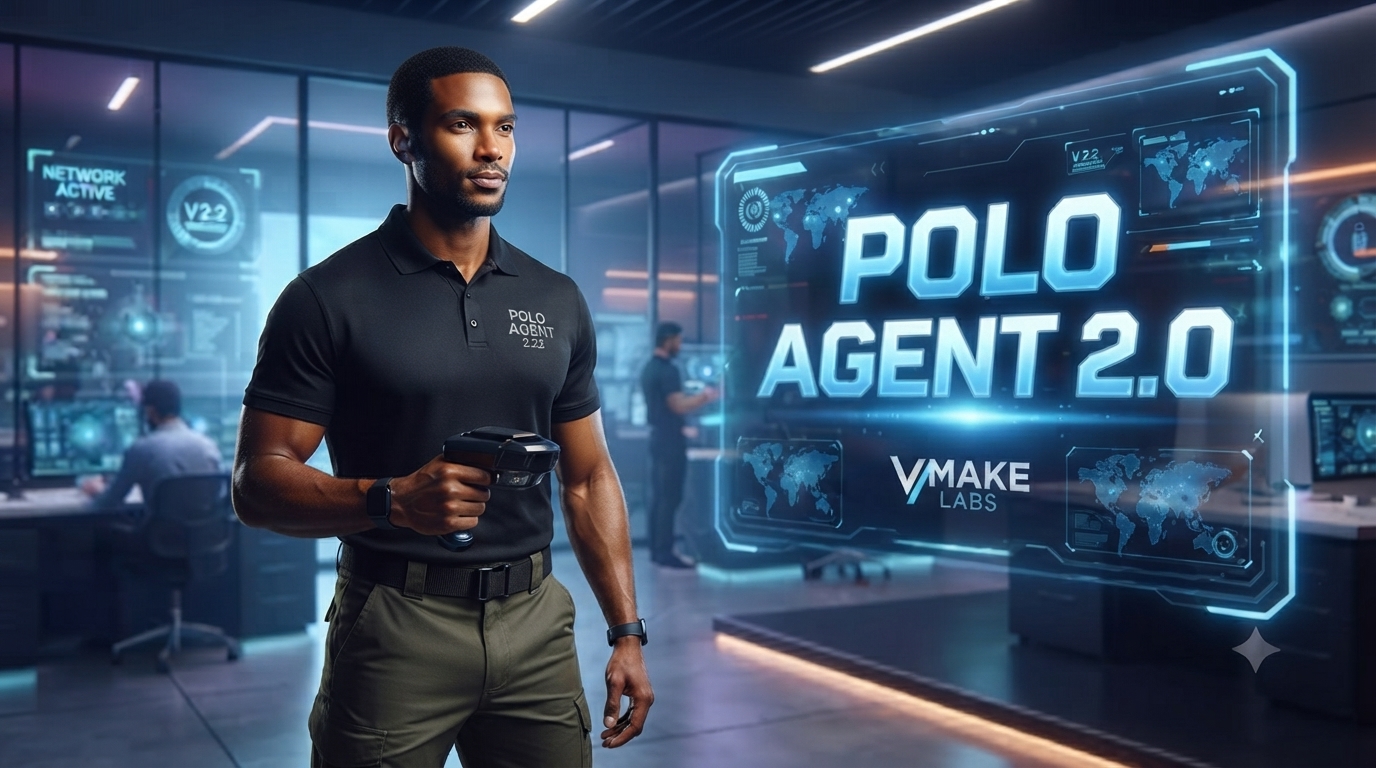
AI Video Production 2026: Why Pollo Agent 2.0 and Vmake Labs Change Everything
The first half of 2026 was defined by a strange kind of anticipation. The creative community was largely waiting for a “Sora-sized” breakthrough from the industry giants—a single, monolithic model that would solve everything. However, as we cross the https://pollo.ai/threshold of August 6, 2026, it is becoming clear that the real revolution in AI video production 2026 isn’t coming from a single magic button. Instead, it is arriving through highly specialized, “agentic” workflow tools that bridge the gap between a raw AI generation and a finished, professional product.
Today’s dual announcements from Pollo AI and the newly rebranded Vmake Labs represent more than just incremental updates. They signal a fundamental shift in how we build visual stories. We are moving away from the era of “prompting for luck” and entering the era of “designing for results,” which is the new standard for AI video production 2026.
Table of Contents
Pollo Agent 2.0: Solving the Consistency Crisis
For anyone working in professional video, the “Uncanny Valley” hasn’t just been about weird-looking faces; it’s been about the lack of temporal and visual consistency. In the early days of generative video, you could create a breathtaking 4K clip of a character, but the moment you tried to generate a second shot, the character’s features would drift, the lighting would shift, and the narrative thread would snap. This has been the primary bottleneck for AI video production 2026 until now.
Pollo Agent 2.0 addresses this “Consistency Crisis” with a narrative-first architecture, setting a new benchmark for the industry.
From Frame-by-Frame to Narrative Flow
Most video models operate on a frame-by-frame or clip-by-clip basis, essentially guessing what comes next. Pollo Agent 2.0 introduces a structural intelligence layer that understands the “intent” behind a sequence. When you feed it a script or a storyboard, the agent doesn’t just generate pixels; it maps out a cohesive visual journey.
This means that if your character is walking through a neon-lit street in Shot A, the agent ensures that the specific reflection patterns and clothing textures remain identical in Shot B, even if the camera angle changes entirely. For professional AI video production 2026, this is the difference between a collection of cool clips and a professional-grade sequence that can actually be used in a commercial or a film.
The Visual DNA Engine
One of the standout features of the 2.0 update is the “Visual DNA” lock. Creators can now upload a “Reference Bible”—a set of character designs, color palettes, and environment sketches. The agent uses this as a persistent anchor. It effectively “learns” the specific look of your project before it starts generating, drastically reducing the need for dozens of retakes and manual “cherry-picking,” which has long been a drain on AI video production 2026 resources.
Vmake Labs: The Blueprint for Brand Storytelling
While Pollo is focusing on the structural consistency of the video itself, the rebranding of Vmake AI into Vmake Labs signals a focus on the broader production environment. The transition isn’t just cosmetic; it’s a strategic pivot toward the “Creator Economy” and high-velocity brand marketing within the AI video production 2026 landscape.
The Social Video Studio
The centerpiece of Vmake Labs is the new Social Video Studio. In the fast-paced world of TikTok, Reels, and YouTube Shorts, brands don’t just need a video; they need ten versions of that video, optimized for different platforms and audiences, all while staying strictly on-brand.
Vmake Labs allows for the direct integration of brand guidelines. You can upload your specific hex codes, font files, and even “brand voice” parameters. The AI then acts as a junior editor, ensuring that every generated asset feels like it came from the same marketing department. This level of automation is a game-changer for AI video production 2026, allowing small teams to output content at a scale that previously required a mid-sized production house.
The Death of Prompt Engineering and the Birth of Workflow Design
If there is one takeaway from the August 6th updates, it is that “Prompt Engineering” is dying. In 2024 and 2025, the skill was in knowing the right “magic words” to trick a model into giving you a good result. In AI video production 2026, the skill has shifted to Workflow Design.
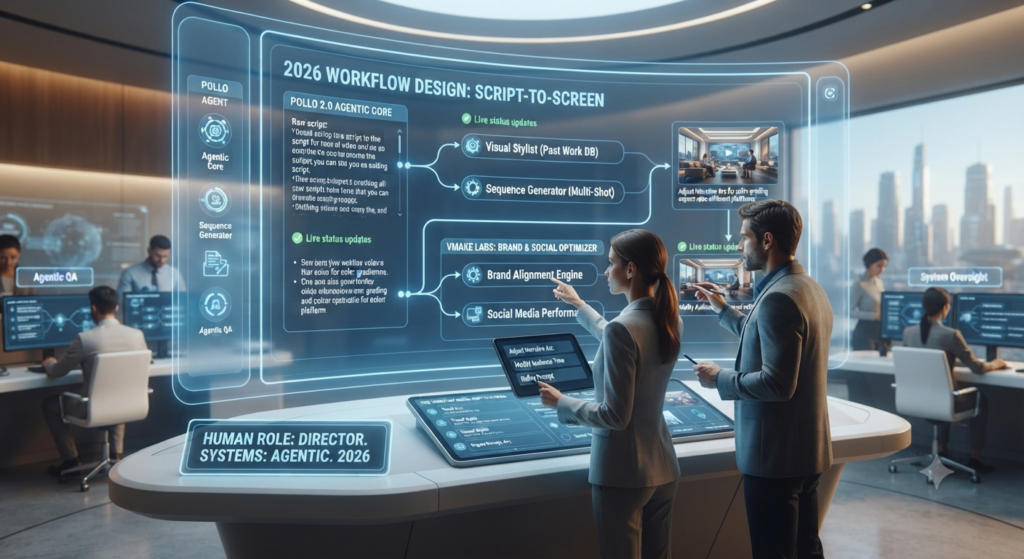
We are seeing the rise of Agentic AI—systems that don’t just follow a single instruction but can plan and execute complex tasks. An agent like Pollo 2.0 can take a raw script, suggest a visual style based on your past work, generate the sequences, and then hand them off to a tool like Vmake Labs for final brand-alignment and social optimization. This integrated approach is defining the future of AI video production 2026.
The human role is shifting from “operator” to “director.” You are no longer fighting the tool to get a usable clip; you are guiding a suite of agents to realize a vision, which is the core philosophy of AI video production 2026.
Market Context: Why the Specialized Tools are Winning
It is impossible to discuss these updates without looking at the broader market. While OpenAI’s Sora has remained largely behind closed doors due to safety concerns and massive compute costs, and Google’s Veo is just beginning its free rollout, specialized platforms have been forced to innovate faster to survive in the AI video production 2026 market.
Platforms like Kling, Runway, and now Pollo have realized that creators don’t want a “God Model” that does everything poorly. They want a suite of reliable tools that do specific things exceptionally well. The August 6th release of Pollo Agent 2.0 and Vmake Labs is a direct response to this demand. It’s a move toward “Publish-Ready” AI—content that doesn’t need a disclaimer saying “Generated by AI,” marking a new maturity in AI video production 2026.
A Practical Workflow for Late 2026
How do you actually use these tools together to stay ahead in the world of AI video production 2026? Here is a suggested “Pro” workflow:
1.Conceptualization: Use a reasoning model (like GPT-5 or Gemini 2) to draft a script and a “Visual DNA” brief for your AI video production 2026 project.
2.Asset Locking: Upload your character and environment references into Pollo Agent 2.0 to anchor the visual style.
3.Narrative Generation: Let Pollo generate the core sequences based on your script, ensuring temporal consistency.
4.Upscaling & Refinement: Use a tool like PixVerse or Topaz to bring the resolution to a native 4K if needed for high-end AI video production 2026.
5.Brand Integration: Drop the finished sequences into Vmake Labs to apply brand-specific overlays, captions, and social-first formatting.
6.Distribution: Use Vmake’s automated studio to export versions for every social platform in one click.
Conclusion: Embracing the Autonomous Production Era
The landscape of AI video production 2026 is no longer a futuristic dream; it is a functioning ecosystem. The arrival of Pollo Agent 2.0 and the evolution of Vmake Labs prove that the industry has matured. We are finally moving past the novelty of “AI-generated pixels” and into the era of autonomous production, which is the defining characteristic of AI video production 2026.
For creators, the message is clear: don’t wait for a single platform to solve all your problems. The power lies in the integration of specialized agents. By mastering these workflows today, you aren’t just keeping up with a trend—you are building the foundation for the next decade of digital storytelling in the age of AI video production 2026.
For more News breakdowns like this one, check out Ai News sections.