
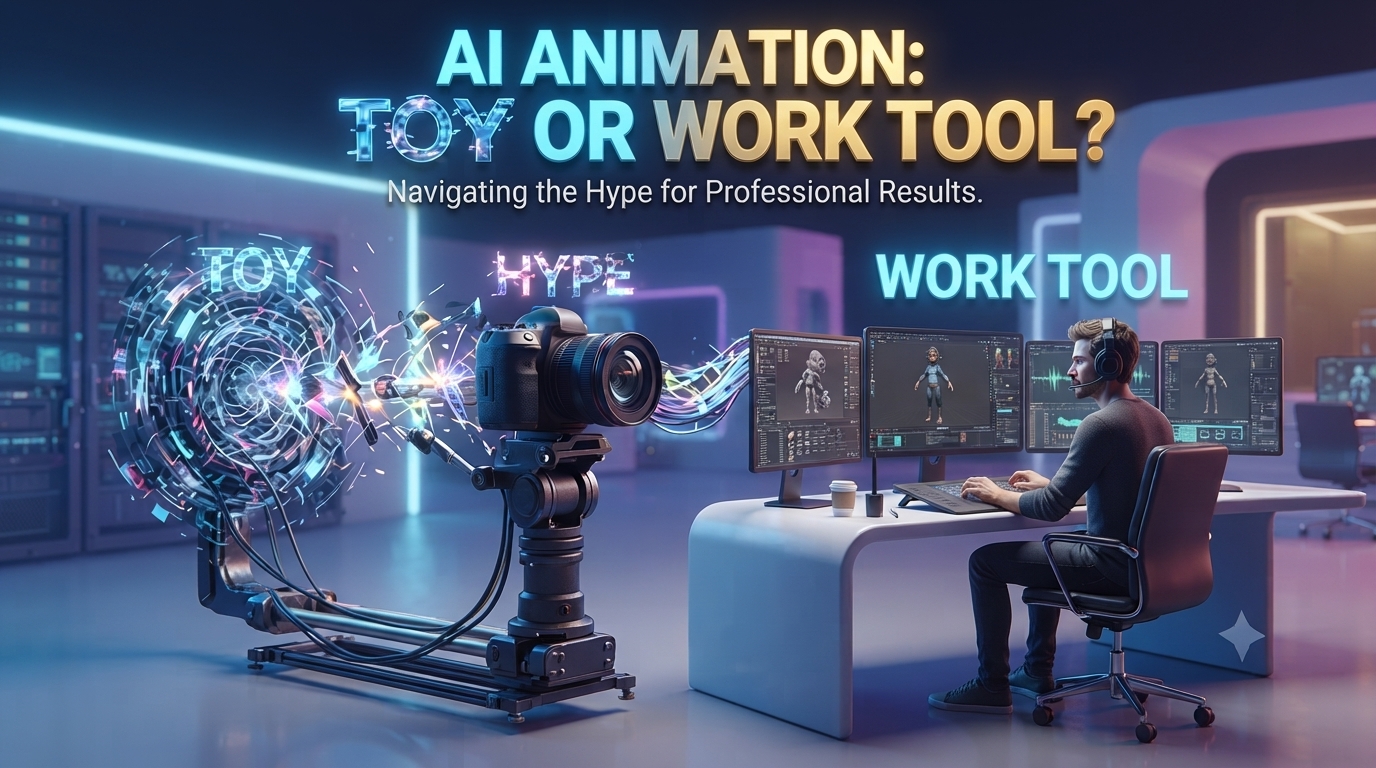
Building a Professional AI Video Workflow: Beyond the Hype
Building a professional AI video workflow is the critical step for creators looking to move beyond the hype of current generative tools. In the current technological landscape, it is nearly impossible to open a news portal or social media feed without encountering claims about a “revolutionary” new AI video generator. Marketing efforts are intense, with many headlines promising that these tools will fundamentally change the nature of video production forever.
However, behind the polished promotional videos often lie significant technical limitations. When these solutions are applied to real-world projects, a clear distinction emerges between tools designed for mere spectacle and those that function as viable, high-value work tools.
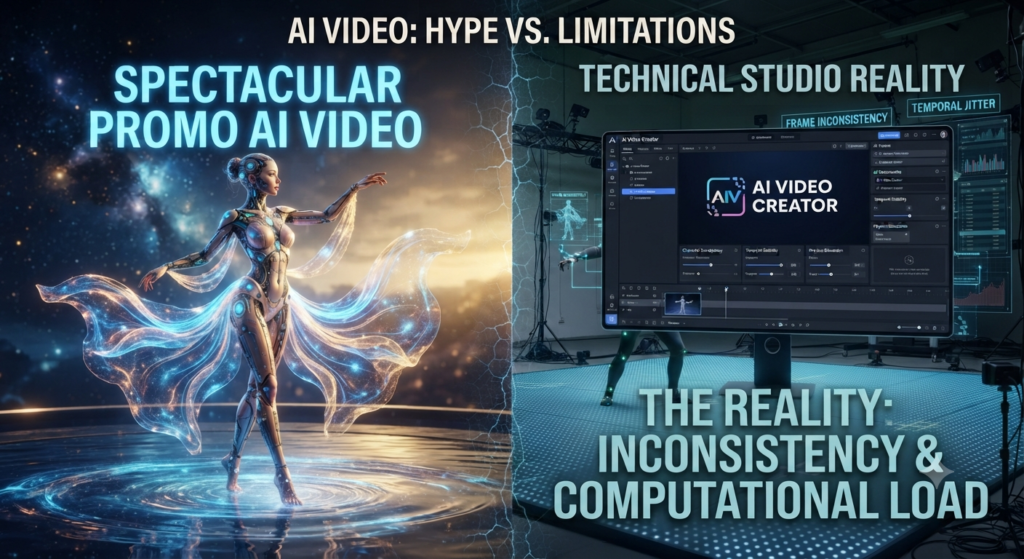
Table of Contents
1. The Challenge of Consistency
The most significant limitation of many AI animation tools is the lack of temporal and visual consistency. While generating a short, visually impressive clip is relatively simple, building a longer narrative requires the character, costume, and environment to remain coherent across every cut—a much more complex challenge. Market-grade generators often produce randomized visual elements that prove unusable in a professional production. True work tools distinguish themselves by providing the user with control, allowing for targeted intervention throughout the generation process rather than relying on chance..
2. Tools for Professional Workflows
The following tools have been selected because they contribute to the stability and reliability of a professional AI video workflow in a daily production environment.
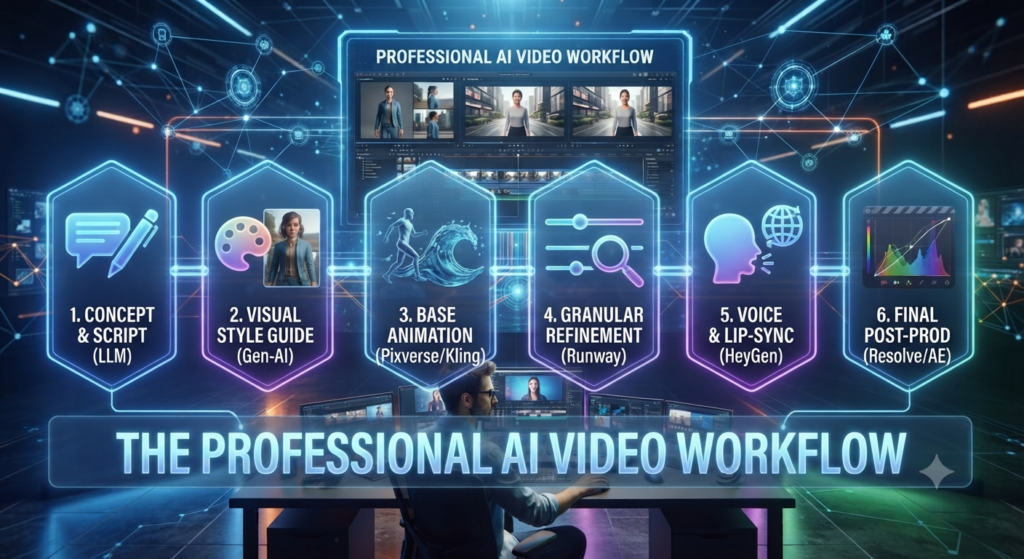
- Pixverse (V3 / Pro): This platform is an excellent choice for character consistency. Its “Character Reference” feature ensures that character features remain stable across different shots, which is a fundamental requirement for effective storytelling.
- Runway (Gen-4.5): As a leader in the industry, Runway remains a reliable choice. Its stable models and granular fine-tuning options result in a lower error rate for complex projects involving multiple cuts.
- HeyGen: For talking heads and video localization, this tool currently sets the standard. Its high-fidelity voice cloning and precise lip-sync capabilities meet the requirements for professional business applications.
- Kling 2.1: This model excels in simulating physical reality. When the task involves animating complex elements such as liquid dynamics, fabric physics, or intricate human movement, it consistently delivers the most convincing results.

3. The Role of Post-Production Integration
A professional AI video workflow does not end at the generator’s export button. The most successful projects treat AI-generated clips as “raw footage” that requires traditional post-production intervention. By integrating tools like DaVinci Resolve or Adobe After Effects, creators can mask artifacts, color grade for visual unity, and composite disparate elements into a singular, polished scene. The key is to use AI to generate the base animation, then leverage manual editing techniques to ensure the final output meets broadcast or high-end digital standards. This hybrid approach mitigates the inherent instability of AI while leveraging its speed and creative potential.
4. Strategy Amidst the Noise
Effective production strategy relies on analyzing specific workflows rather than blindly following current trends. Technology provides genuine value when it significantly reduces the time required for previously labor-intensive manual tasks—such as masking, background compositing, or base animation. While technological hype is cyclical, the conscious integration of purpose-built tools ensures a sustainable competitive advantage. By architecting a pipeline where each tool serves a specific, documented purpose, creators can turn chaotic generation into a predictable, scalable process. Ultimately, the goal is not to let the AI dictate the output, but to master a technical stack that serves the narrative, ensuring consistent quality from the first frame to the last.
5. Managing Client Expectations and Quality Control
When selling AI-assisted video services, transparency is vital. Clients often expect “Pixar-level” perfection based on marketing clips, but the reality of iterative AI generation requires a managed feedback loop. Establish “milestone approvals” where the client signs off on character design and environmental look-and-feel before full-scale animation begins. Implement rigorous quality control protocols to check for “AI hallucinations” or morphing artifacts that may have slipped through the initial generation phase. By framing the project as a technical production—not just a prompt-based experiment—you build the trust necessary for long-term professional partnerships.
Conclusion: The Future is Integrated Production
Implementing a professional AI video workflow is more than just a trend; it is the foundation of modern digital content creation. As the industry evolves, it becomes increasingly important to move beyond mere tool usage and build a thoughtful, documented, and scalable production pipeline. AI-based animations now go beyond experimentation; with the right strategy, they create real business value.
Discover more here: ➔ aianimmedia.com